
Commercial Earthquake Insurance
Guardian Insurance Agency
Keep your foundation and your cash flow steady when the ground moves.
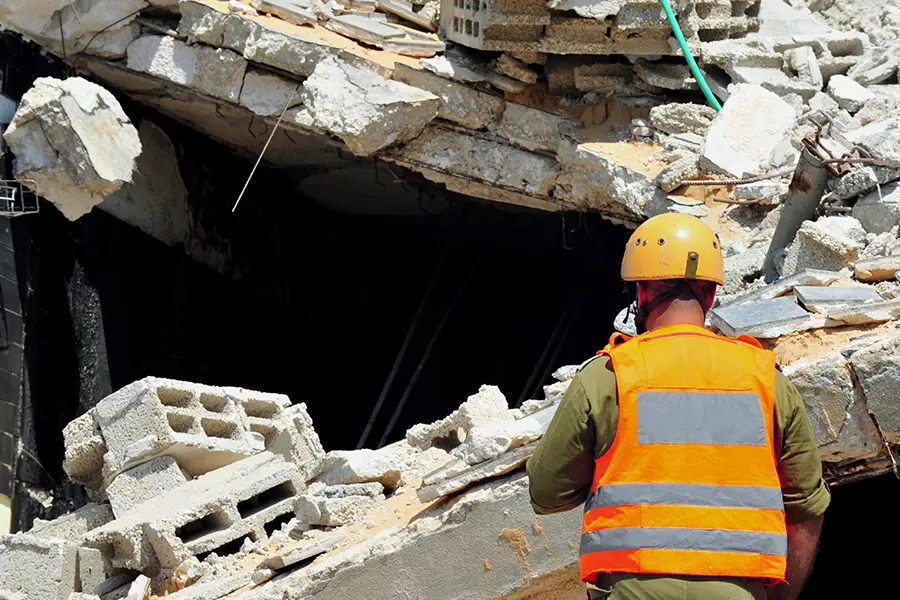
Most standard commercial property policies exclude earthquake. If a quake cracks walls, shifts foundations, or shatters inventory, you need a separate earthquake policy (or a Difference‑in‑Conditions program) to fund repairs, protect assets, and bridge lost income.
- Home
- Business and Commercial Insurance
- Commercial Earthquake Insurance
What commercial earthquake insurance covers
Coverage varies by carrier and policy; we’ll tailor limits, deductibles, and endorsements to your sites.
- Building & structures: Foundations, walls, floors, roofs, fixtures, glass.
- Business personal property: Equipment, inventory, furniture, technology.
- Business income & extra expense: Replace lost revenue and pay to relocate, expedite repairs, and resume operations.
- Debris removal & site stabilization: Clear and secure damaged areas.
- Ordinance or Law: Increased rebuild costs to meet current seismic codes.
Deductibles: Earthquake policies often use percentage deductibles (e.g., 5%–20% of insured value per location). We’ll structure terms around your asset values and tolerance for risk.
Why you need it
Earthquakes can trigger structural damage, utility failures, landslides, and fires closing doors for days or weeks. Even if your building looks intact, non‑visible damage (shifted slabs, compromised anchors) and regional contractor shortages can lengthen downtime. Dedicated coverage keeps repairs and payroll funded while you reopen.
What earthquake insurance usually doesn’t cover
Some exposures require companion policies or endorsements:
- Fire and vehicle damage: Typically handled by your commercial property and business auto policies.
- Flood/tsunami & water main breaks: Require flood coverage (often separate).
- Land damage not tied to covered building loss: Sinkholes, erosion, certain land movement exclusions.
- Wear, tear, and maintenance issues.
We’ll stack the right protections property, earthquake, flood, equipment breakdown, utility service/time‑element so there are no gaps.
Helpful options to consider
- Difference‑in‑Conditions (DIC): Broad form that can wrap earthquake and flood exclusions in one program.
- Utility Service (time‑element): Lost income when off‑premises power or water outages halt operations.
- Ingress/Egress & Civil Authority: When roads close or officials restrict access.
- Extended Period of Indemnity: Income protection after repairs while you ramp back to normal.
- Equipment Breakdown: Mechanical/electrical failures and sprinkler leakage after a quake.
- Parametric earthquake: Event‑based triggers (e.g., peak ground acceleration) for fast payouts.
What affects price
- Building age & construction type (unreinforced masonry vs. retrofitted steel/concrete).
- Seismic exposure (proximity to faults, soil type, liquefaction risk).
- Occupancy & contents (light office vs. heavy manufacturing).
- Limits, sublimits, and percentage deductibles.
- Loss controls (seismic retrofits, bracing, anchoring, flexible gas/water lines).
- Claims history and business continuity planning.
Practical risk‑reduction steps
- Anchor shelving, equipment, servers; brace gas/water heaters and fire‑suppression tanks.
- Install flexible connectors on gas and water lines; auto‑shutoff valves where appropriate.
- Harden data & operations: Offsite/immutable backups, emergency comms, vendor agreements.
- Train & drill: Employee safety, evacuation, shutdown procedures.
- Pre‑arrange vendors: Structural engineers, restoration crews, debris haulers.
The Guardian way
We map your sites and seismic hazards, right‑size limits and deductibles, integrate DIC, utility time‑element, and BI/Extra Expense, and coordinate loss‑control steps so one quake doesn’t derail your plans.
Guardian Insurance Agency — Proper protection—prior to peril.
Requirements vary by jurisdiction; we’ll match the exact form your obligee needs.
Call
+1 888 388 2864
Visit
1818 E 1st Street #530 Santa Ana CA 92705